
Full List
Everything Worth Doing in Egypt
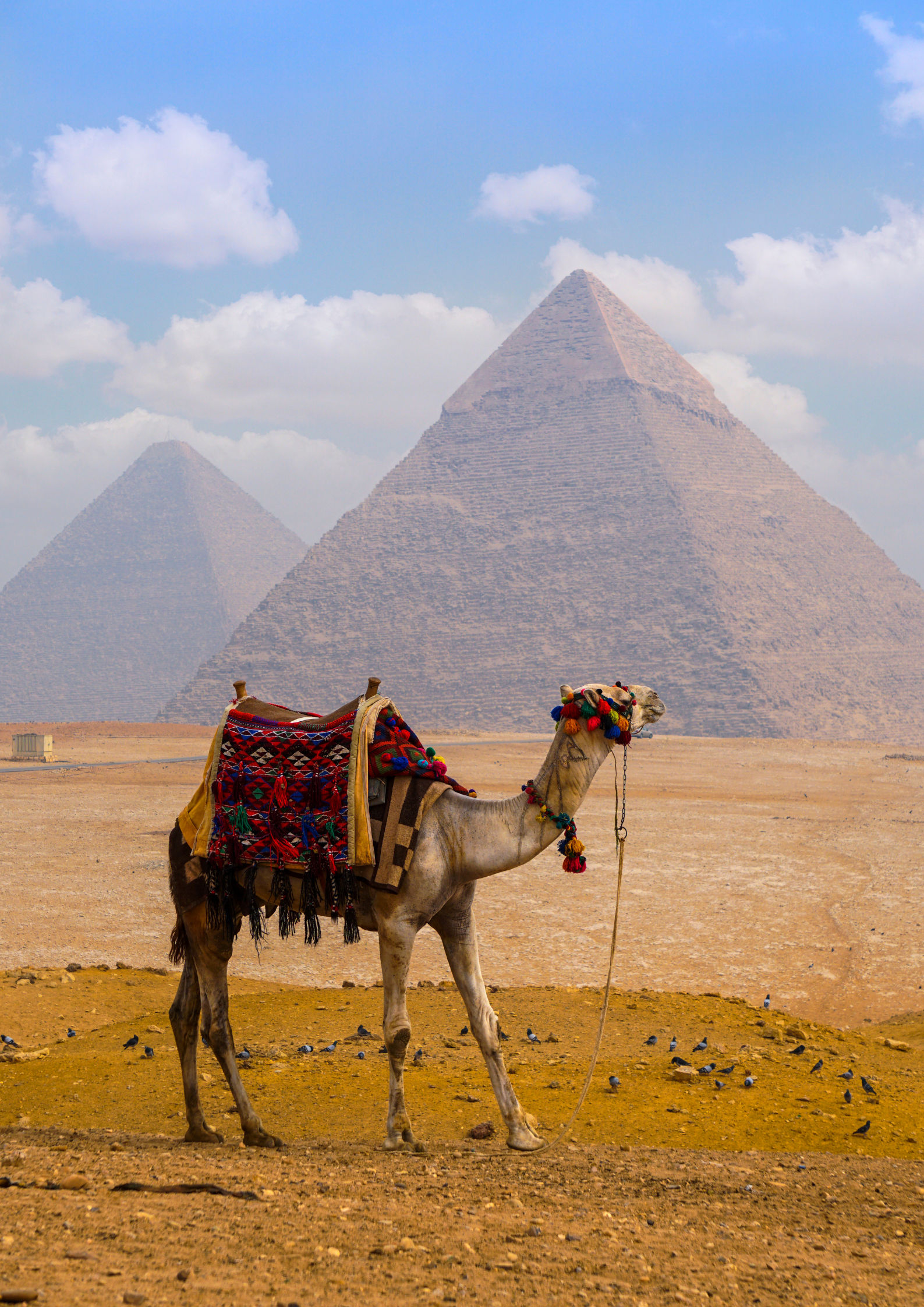
The only surviving wonder of the ancient world — three pyramids built with a precision that modern engineers still struggle to explain, for reasons still debated by archaeologists. The Great Sphinx stands guard before them. At dawn, with the desert light slanting across the stones, the Pyramids still command an awe that 5,000 years of human history has not diminished.

Ancient Thebes — Egypt's greatest open-air museum. The Valley of the Kings holds 63 royal tombs including Tutankhamun's; Karnak Temple complex took 2,000 years to build; Luxor Temple is lit up at night and reflected in the Nile. A felucca sail between Luxor and Aswan through sugar cane fields at sunset is Egypt at its most timeless.

Four 20-metre statues of Ramses II carved from a cliff face 3,200 years ago — and in 1968, an entire international engineering effort moved the whole temple 65 metres uphill to save it from the rising Nile. Twice a year the sun penetrates 60 metres into the mountain to illuminate the inner sanctuary. Engineering as mythology.

A medieval bazaar in continuous operation since 1382 — alleyways of spices, perfume oils, silver lanterns, papyrus art and hookah pipes under vaulted ceilings. The oldest coffeehouse in the Middle East (El Fishawy, established 1773) opens onto the bazaar's main square. This is where Cairo's soul is kept.

The Red Sea has some of the world's finest and most accessible diving — warm clear water, year-round visibility of 20–30m, coral walls teeming with Napoleon wrasse, reef sharks and neon-lit fish. Hurghada is the mass-market option; Dahab's Blue Hole and Marsa Alam are where serious divers go.
The Grand Egyptian Museum — the world's largest archaeological museum, opened near the Pyramids in 2023 — holds 100,000 objects including the complete, perfectly preserved Tutankhamun collection (5,000 objects from a single tomb). The golden death mask alone stops every visitor cold.
Luxor packs more pharaonic history per square kilometre than anywhere on earth — the Valley of the Kings, Karnak Temple (the largest religious complex ever built), Luxor Temple, Hatshepsut's cliff-face mortuary temple and dozens of lesser-known tombs across the Nile's West Bank.

A 3–4 night cruise between Luxor and Aswan on the ancient river — stopping at Esna, Edfu and Kom Ombo temples along the way, watching felucca sailboats on banks that haven't changed much since the pharaohs' time. Egypt's most civilised way to see the Upper Nile monuments.
The world's most famous dive site — a 150m underwater sinkhole in the Red Sea near Sinai, with clear water, coral walls and a challenge dive that has claimed many lives. Beginners can snorkel the surface; certified divers access the arch.
The White Desert National Park, 6 hours from Cairo — chalk rock formations eroded into surreal mushroom shapes by wind, glowing white under the full moon. Camping here under the Milky Way with Bedouin guides is Egypt's most otherworldly experience.
An ancient wooden sailboat gliding past Nubian villages and Elephantine Island on the Nile at golden hour — the most peaceful thing Egypt offers, and one of the most beautiful river scenes in the world.
The world's largest concentration of medieval Islamic architecture on a single street — mausoleums, mosques and madrasas from the Fatimid and Mamluk eras, many in active use. Particularly atmospheric at dawn during the call to prayer.
A desert oasis in Egypt's western corner near Libya — oracle temple where Alexander the Great was declared a god, natural spring pools, salt lakes and one of North Africa's most remote and beautiful Berber communities.
Egypt's eastern desert, away from all city light, offers some of the clearest night skies on earth — the Milky Way visible in its full arch, shooting stars nightly, and the silence of a desert at 3am that is unlike any other quiet.
FAQs
Things to Do in Egypt — Common Questions
Ready to See Egypt?
Tell us what interests you most — we'll build the right mix into your itinerary.
Plan My Trip on WhatsApp