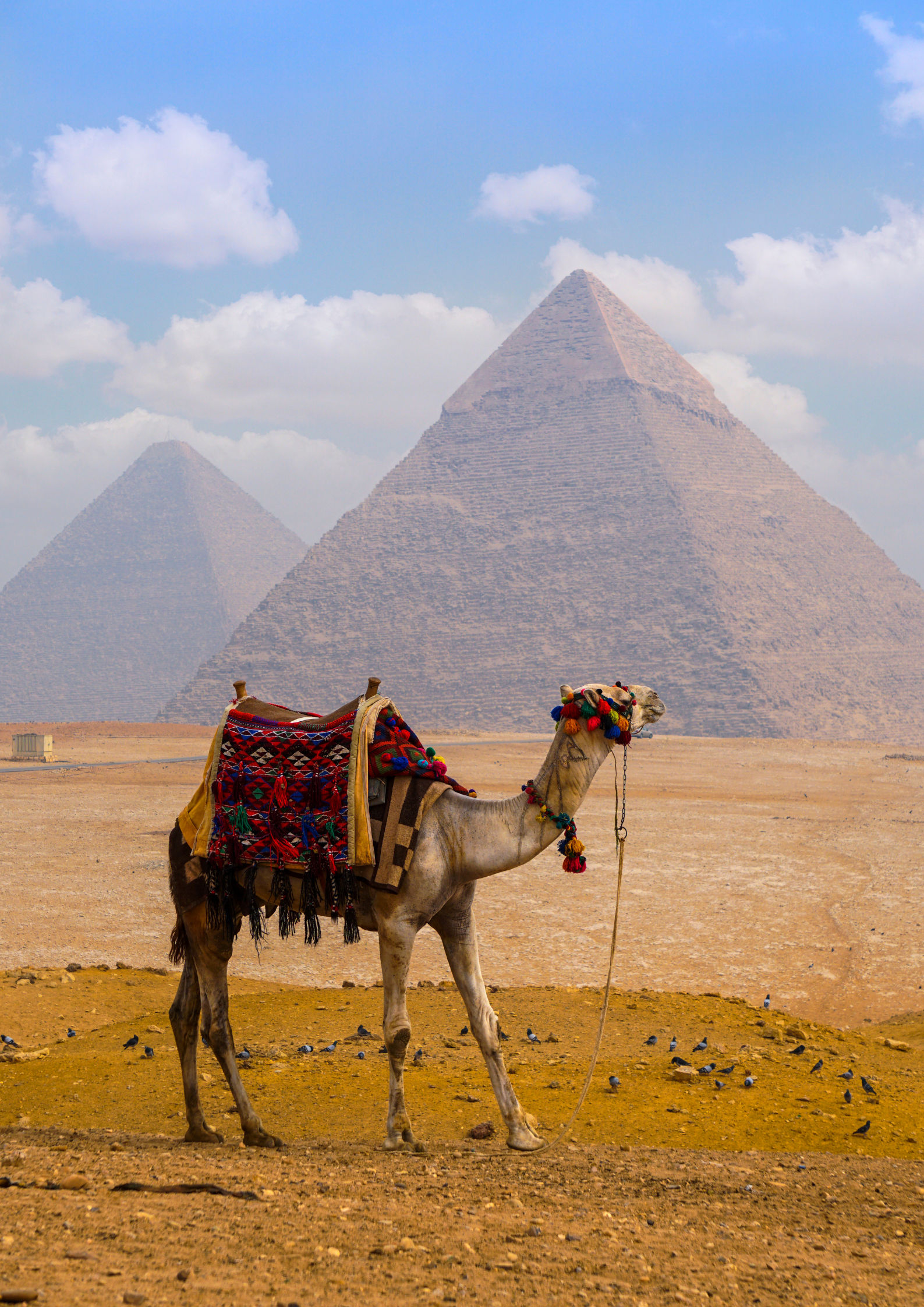
Getting Oriented
Cairo, Cairo Governorate, Egypt
Cairo is the Arab world's largest city — a sprawling, chaotic, magnificent metropolis where pharaonic obelisks stand in traffic roundabouts and medieval minarets rise above apartment blocks. Islamic Cairo's Khan el-Khalili bazaar has traded continuously since the 14th century; the Egyptian Museum holds Tutankhamun's golden death mask. The Nile bisects it all, and from a rooftop at dusk the city's scale becomes almost incomprehensible.
Culture
What Makes Egypt Distinct
Egypt doesn't need to show off its history — it just exists within it. You eat beside a 1,000-year-old mosque in a market that's been running for 600 years and nobody thinks this is remarkable.
Eat
What to Eat in Egypt


Shop
What to Bring Back from Egypt
Genuine hand-painted papyrus (made from the same Cyperus papyrus plant Egyptians used 4,000 years ago) depicting pharaonic scenes — the Dr. Ragab Papyrus Institute in Cairo sells certified authentic papyrus, as opposed to the banana-leaf fakes sold in tourist shops.
Hand-hammered brass lanterns and copper trays engraved with geometric Islamic patterns are Cairo's most beautiful craft export. The coppersmiths' quarter (Sharia al-Muizz in Islamic Cairo) has workshops that have operated since the Ottoman era.
Egypt's essential oil tradition dates to the pharaonic era — jasmine, lotus, rose and frankincense oils from the Aswan and Luxor markets are extraordinarily pure and cheap by Western standards. Alabaster perfume bottles carved in Luxor make elegant vessels for bringing them home.
Alabaster has been quarried near Luxor for 4,000 years — workshops in the Valley of the Kings area produce canopic jars, pharaonic busts and scarab beetles in the same material used in the original royal tombs. Heavier to transport than most souvenirs but genuinely beautiful.
FAQs
Egypt Travel Guide — Common Questions
Ready to Plan Egypt?
Tell us your dates and we'll build a complete itinerary.
Plan My Trip on WhatsApp